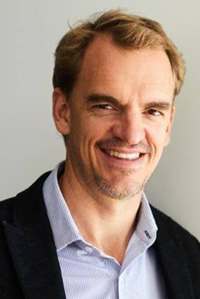
Richard Field
- Conflict Resolution
- Inspirational
- Leadership
- Motivational
- Occupational Health And Safety
- Personal Development
- Resilience
- Risk Management
Richard Field is a world renowned African safari guide. At 25, he survived a lion attack in the wilds of Botswana — a moment that reframed his entire worldview and has given him the understanding and perspective to become a leading voice in workplace safety. His ethos is that individuals need to take personal responsibility for their own safety and this means being fully present and consciously making better decisions.
Drawing on decades of guiding in unpredictable & dangerous environments as well as his dramatic near death experience, Richard uses a storytelling approach founded in authenticity and hard-earned insight. He brings the African savannah to the work place, and seamlessly builds relevance.
His story is compelling. Invariably you can hear a pin drop in an audience of any size. Richard then leads audiences on a virtual walk through the African bush, revealing how internal mindset, assumptions, fatigue, distractions and rushed thinking are invariably more dangerous than elephants, buffalo and lions.
His talks don’t lecture — they engage and then invite reflection, ownership and change. Richard has delivered keynotes across Australia to frontline workers, contractors, executives, and safety leaders, leaving lasting impact across high-risk industries.
This is the safety presentation that both management and front line workers will be excited to listen to, and creates the platform for positive cultural change in safety awareness.
Richard Field never planned on being a WHS speaker. He was, is and always will be an African safari guide. But at 25 he was attacked by a lion in the wilds of northern Botswana. She knocked him to the ground and eventually bit down hard and deep on the back of his head. It was then that his life dissolved…
Richard’s story is compelling. Invariably you can hear a pin drop in an audience of any size. Richard’s decision to eventually and begrudgingly take personal responsibility for the accident provided him with an epiphany. It’s not the lion that was dangerous, it was his compromised decision making – something that is within his control. This allowed him to go back and work as a safari guide, but where he was more conscious of his decision making.
From the story Richard takes each audience member on a simulated 12 kilometer walk through a wilderness teeming with dangerous animals. It is here that he is able to show people that in his line of work, the difference between life and death isn’t the elephant or the Cape buffalo or the lioness – it is what is happening inside. Complacency and assumptions of safety, fatigue, distractions and rushing are the things that could ultimately lead to the compromised decision making which is the main contributor to dangerous moments.
Richard wraps up by talking about how culture influences the decision making of individuals, but that individuals can also influence the culture of the work place through their own example and demonstration.
Richard’s technique of keeping the stories and analogies focused on Africa’s wild places, draws in each audience member and they find their own understanding that whilst safety is also a shared responsibility, they need to take responsibility for their own decision making and therefore their own safety.
- The Lion in the Workplace
Richard delivered an unforgettable presentation for our organisation during Safe Work Month … over six sessions, Richard engaged and inspired more than 750 staff members … one of the most impactful safety presentations we’ve experienced.
I’m often sceptical … Richard is different … leaves the audience with a deeper understanding … role of leaders and followers … jointly achieving a goal and doing so safely.
Richard’s story was pivotal in helping our teams understand that danger doesn’t come from our power lines, but from our decision making. It provided a great base for us to open up further discussions about what we can do to stay switched on and be more conscious of our decisions.